

Internal links that turn blog traffic into trials
Published Feb 06, 20269 min read
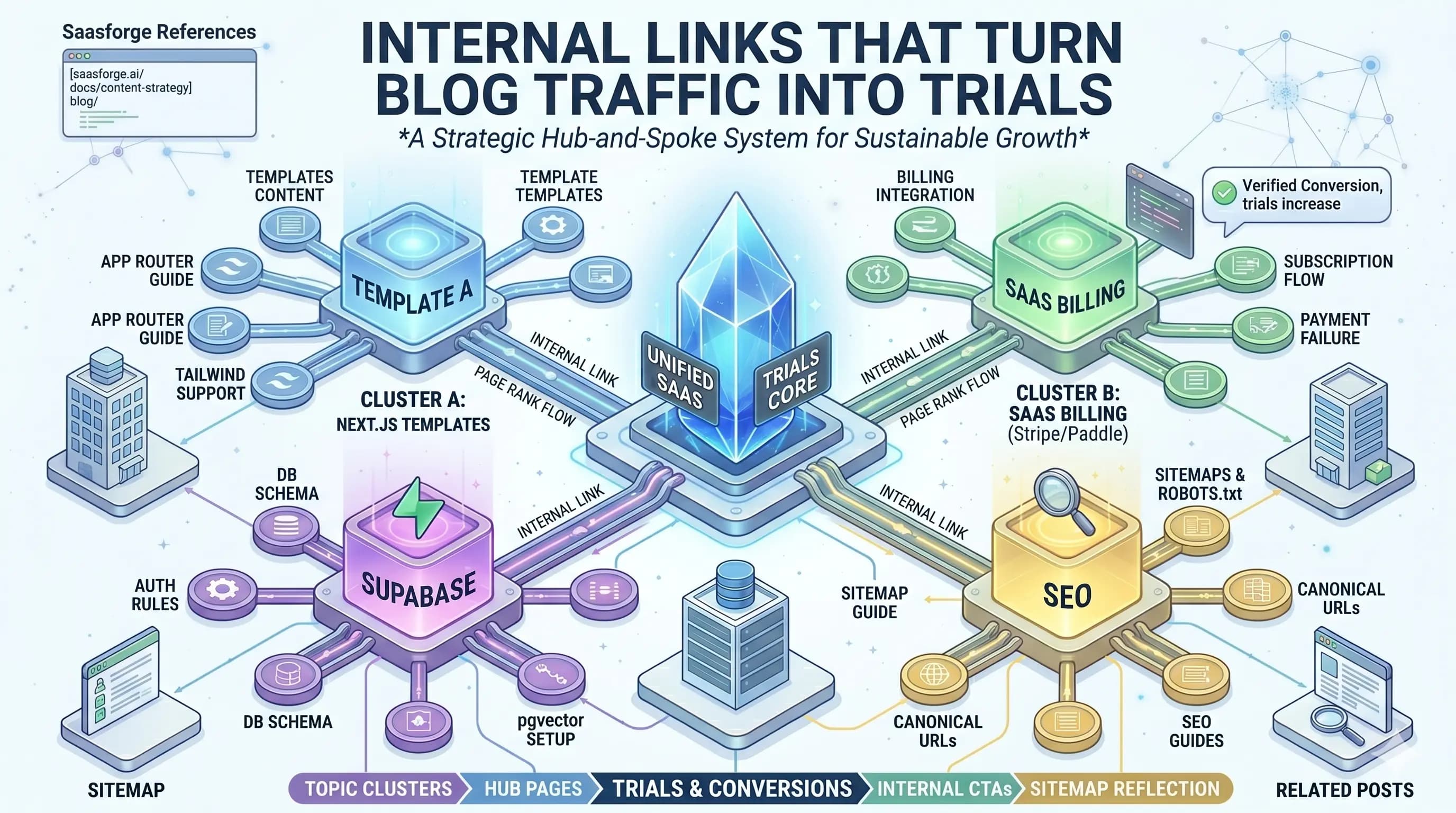
Orphan posts rank, then die on page two because nothing else on the site tells Google: or humans: what to read next.
This is a lightweight hub-and-spoke system you can run solo: pick a few pillars, link outward on publish, and point every pillar back to pricing or docs once.
1) Pick 3–5 core topics (clusters)
For a template marketplace, clusters might be:
- Next.js templates
- SaaS billing (Stripe, Paddle)
- Supabase auth + database
- SEO for App Router
- Launch checklists
Each cluster needs:
- One “pillar” page (the overview)
- 3–8 supporting posts (the details)
2) Write pillar pages that link outward
Your pillar posts should include:
- an overview of the topic
- a table of contents
- links to supporting posts
- a CTA to your product page
Example: this site’s /blog/nextjs-saas-template-vs-boilerplate can be a pillar for “templates.”
3) Use internal CTAs intentionally
Avoid dumping “Buy now” everywhere. Instead:
- link to docs when someone is researching implementation
- link to the template when someone is comparing options
Examples:
- “See the billing docs” →
/saasforge-ai/docs/stripe - “See the template” →
/saasforge-ai
4) Add a consistent “related posts” section (optional)
Even a small “Related” list at the end of each post helps:
- keep readers on-site
- distribute PageRank internally
- increase conversions over time
5) Make your sitemap reflect reality
If you publish regularly, ensure:
- all blog posts are in your sitemap
- canonical URLs are set
- robots.txt points at the sitemap
This repo includes those pieces so your content is crawlable by default.